 Risk Track
Risk Track
Risk Track
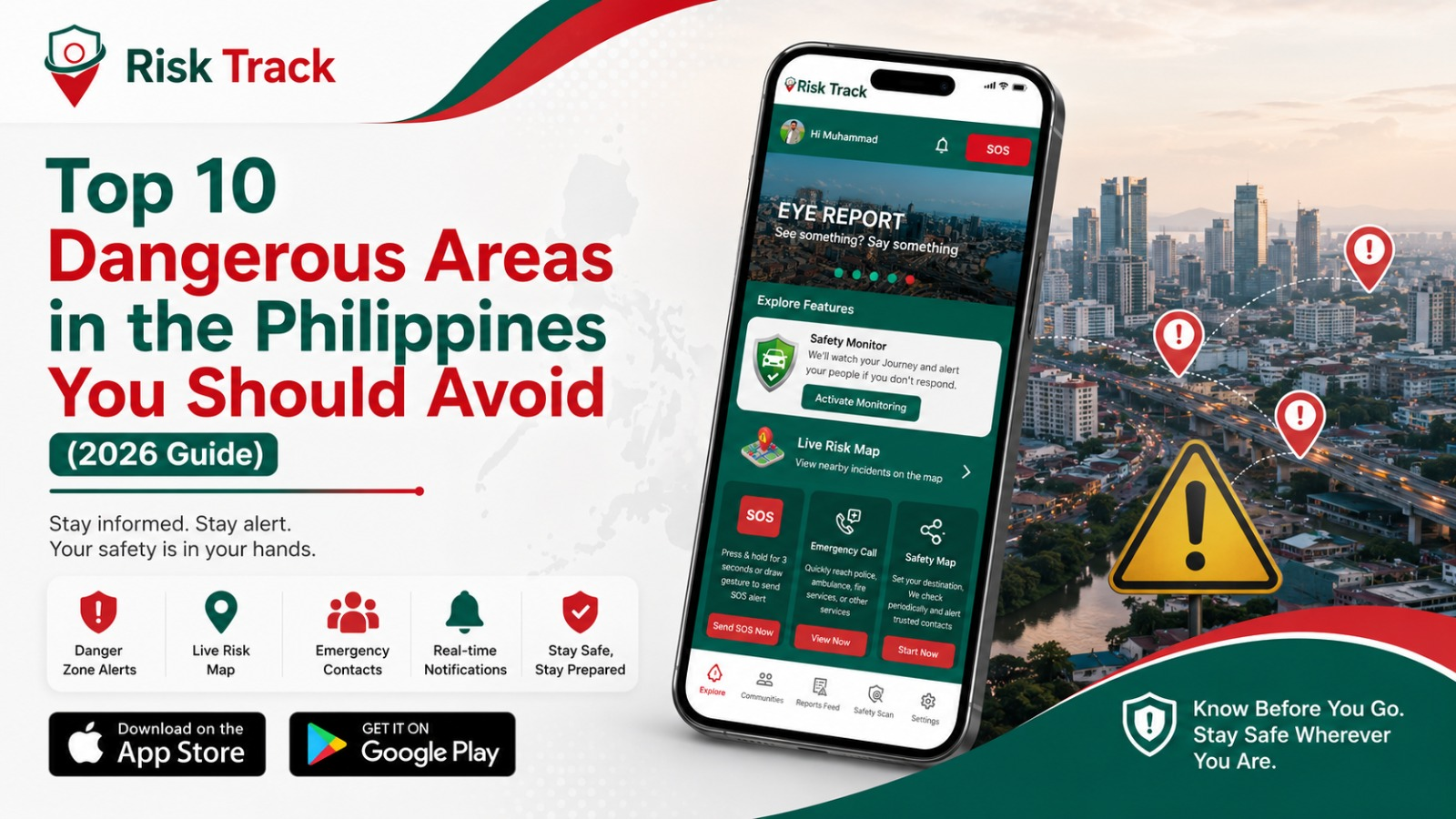
When it comes to travelling or living in a new country, safety is always a top priority. The dangerous areas in the Philippines vary depending on crime rates, urban density, and socio-economic conditions. While the Philippines is a beautiful country with millions of safe and welcoming locations, some regions face higher safety risks compared to others.
Understanding the dangerous areas in the Philippines is not about fear—it is about awareness. Whether you are a traveler, student, or resident, knowing where risks are higher can help you make smarter decisions and stay safe.
In this guide, we explore the top 10 dangerous areas in the Philippines you should avoid in 2026, based on crime trends, urban safety reports, and public safety discussions. We also share practical travel safety tips and explain how modern tools like the Risk Track personal safety app can help you stay protected in real time.
Before listing the most dangerous places in the Philippines, it is important to understand the reasons behind higher risk levels:
These factors contribute to identifying high crime areas in the Philippines and help authorities and safety platforms provide better guidance.
Below are the most discussed unsafe cities in the Philippines and regions where travelers and residents should exercise caution.
Manila is often considered one of the most dangerous cities in the Philippines due to high population density and urban crime.
Common risks include:
Despite this, many parts of Manila are safe with proper awareness. Manila is frequently listed among the top crime cities in the Philippines, especially in crowded districts.
Quezon City is one of the largest urban areas in the country. While it is developed, some districts report higher crime activity.
It remains a mixed-safety city with both safe and risky zones.
Cebu is a major tourist hub but also appears in discussions about top 10 dangerous places in the Philippines due to occasional street crime.
Still, Cebu remains highly popular for tourism.
Davao is known for strict law enforcement, but some outskirts may still face safety challenges.
Overall, it is considered one of the safer large cities compared to others.
Zamboanga has historically faced security concerns in certain areas.
It is important to check updates before visiting.
Caloocan is often mentioned in discussions about unsafe cities in the Philippines.
Awareness is key when moving through this area.
Not all of Quezon Province is unsafe, but some rural areas may have limited security coverage.
Cavite is a fast-growing province near Manila.
Many parts are safe, but caution is advised in busy districts.
Laguna is generally safe, but industrial and transportation areas may have risks.
Some remote parts of Mindanao are often listed among highest crime rate cities in the Philippines discussions due to historical conflict zones.
Always check updated travel advisories.
To reduce risk while traveling or living in high crime areas in the Philippines, follow these safety practices:
The Risk Track personal safety app is designed to help users stay aware and protected in real time. Whether you are traveling or living in urban areas, it provides:
Instead of guessing which are the most unsafe city in the Philippines, Risk Track gives you live, data-driven insights to help you move safely. Explore more features in our personal safety app.
Understanding the top crime cities in the Philippines is not about avoiding the country—it is about improving awareness. Millions of people live and travel safely every day, but awareness reduces risk significantly.
Smart travelers use information, planning, and tools like Risk Track to make better decisions.
The dangerous areas in the Philippines vary widely depending on location, time, and circumstances. While some cities experience higher crime rates, many regions remain safe and welcoming.
By staying informed, following safety practices, and using technology like the Risk Track personal safety app, you can significantly reduce risks and travel with confidence in 2026. Prioritize your protection with the best personal safety apps available.
Some urban districts in Manila, Cebu, and Caloocan are often discussed due to higher crime activity.
Manila is frequently mentioned among the most dangerous city in the Philippines due to population density and urban crime.
Yes, many areas are safe, but travelers should avoid high-risk zones and stay alert.
Manila, Cebu, and parts of Caloocan are often listed among top crime cities in the Philippines.
Some urban districts in major cities may have higher petty crime rates.
Use safe transport, avoid risky areas at night, and stay updated with local alerts.
High-density urban zones and crowded markets may have higher petty theft risks.
Cebu is generally safe but has some areas with tourist-related scams and petty theft.
Use verified transport, avoid isolated streets, and use safety apps like Risk Track.
Risk Track provides SOS alerts, live tracking, and real-time safety updates.