 Risk Track
Risk Track
Risk Track
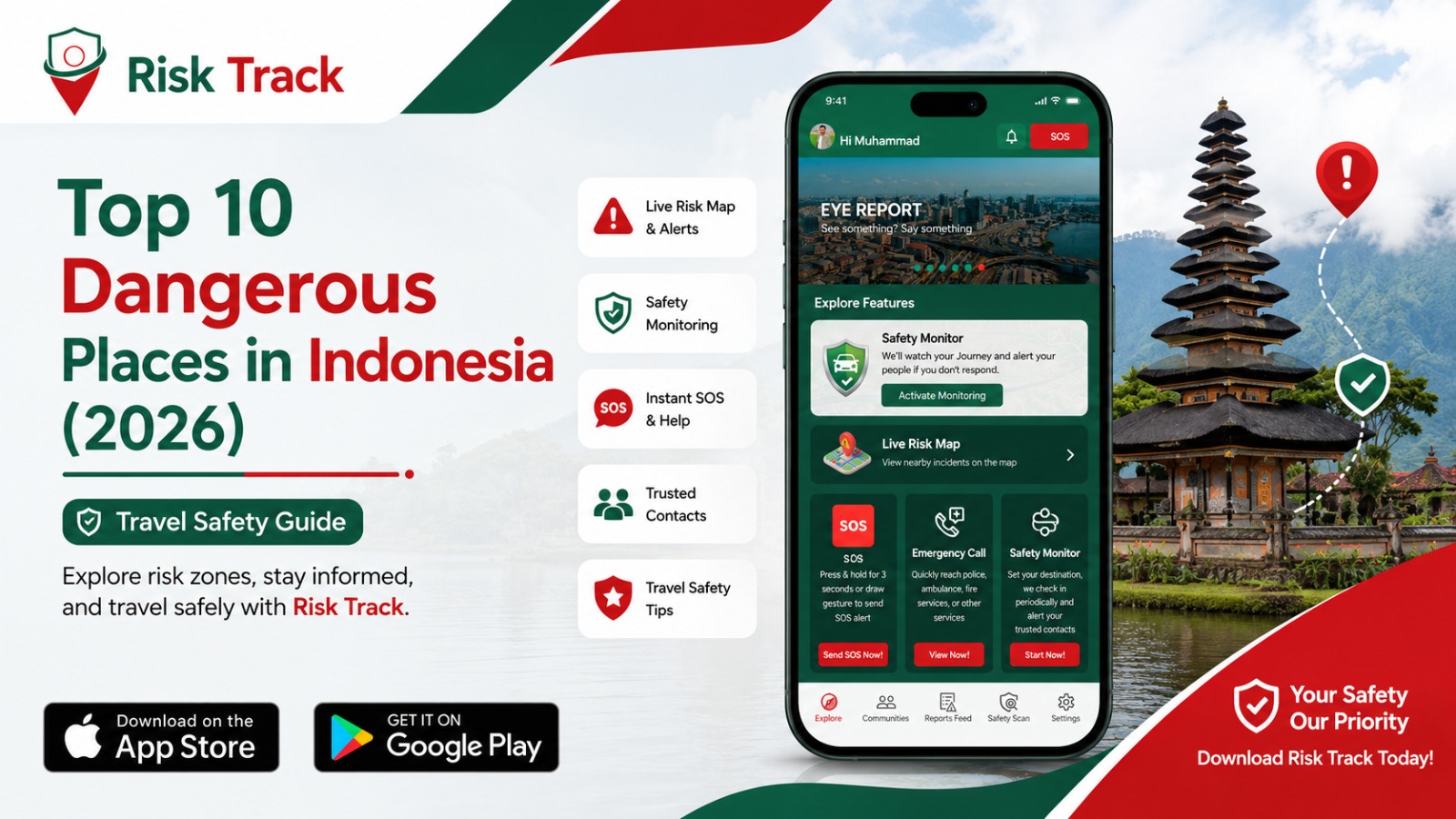
Indonesia is one of the world's most beautiful travel destinations. From Bali's stunning beaches and Java's ancient temples to Komodo National Park and Raja Ampat, millions of visitors travel across the country every year. While most trips are safe and enjoyable, every traveler should understand that safety conditions vary from one region to another.
This guide highlights areas that require additional caution due to higher levels of theft, scams, traffic accidents, natural hazards, or occasional security concerns. It is not intended to discourage travel but to help visitors make informed decisions and prepare for a safer journey.
Whether you're traveling alone, with family, or on business, staying aware of your surroundings and planning ahead can significantly reduce your risk.
Yes. Indonesia is generally considered safe for tourists, and millions of international visitors experience trouble-free vacations every year.
However, like many large countries, Indonesia has areas where travelers should exercise extra caution. The most common issues affecting visitors include:
Most incidents can be avoided by practicing basic travel safety and staying informed throughout your trip.
Indonesia consists of more than 17,000 islands and hundreds of cities. Safety levels differ considerably between destinations.
Instead of asking whether Indonesia is safe, a better question is:
Which locations require extra awareness, and what precautions should travelers take?
The following locations have experienced higher levels of crime, security incidents, heavy traffic, or other risks that visitors should know before traveling.
Indonesia's capital is exciting, modern, and full of attractions, but it also experiences the country's highest concentration of urban crime simply because of its large population.
Common concerns include:
Busy transportation hubs, crowded shopping districts, and tourist attractions require extra vigilance.
Safety Tips
Surabaya is Indonesia's second-largest city and an important commercial center.
While generally safe during the day, visitors should remain cautious in unfamiliar neighborhoods at night.
Potential concerns include:
Business travelers should use reputable transportation and choose accommodations in well-reviewed areas.
Located in North Sumatra, Medan is a popular gateway to Lake Toba and Bukit Lawang.
Some travelers report:
The city itself is worth visiting, but travelers should plan transportation carefully.
Makassar serves as the gateway to eastern Indonesia.
Although tourism continues to grow, visitors should be cautious regarding:
Avoid walking alone late at night in unfamiliar districts.
Batam attracts many visitors due to its proximity to Singapore.
Popular nightlife areas occasionally experience:
Visitors should monitor personal belongings, especially in entertainment districts.
Bali remains Indonesia's most famous tourist destination.
Although millions visit safely every year, busy areas around Denpasar and nearby tourist zones experience:
Traffic is another major safety concern, especially for inexperienced scooter riders.
Jayapura offers beautiful scenery but has experienced occasional civil unrest and demonstrations.
Travelers should:
Conditions may change depending on local events.
This mountain region attracts thousands of domestic tourists.
Potential risks include:
Drivers should avoid speeding and monitor weather forecasts.
Papua contains incredible natural beauty but also presents unique travel challenges.
These include:
Travelers should research local conditions carefully before visiting remote districts.
Rather than a single city, many crowded tourist markets require additional awareness.
Examples include markets in:
Common problems include:
Always keep bags zipped and valuables secure.
Crowded buses, markets, festivals, shopping centers, and tourist attractions provide opportunities for thieves.
Carry only essential cash and avoid placing phones in back pockets.
Road accidents remain one of the biggest risks for visitors.
Many travelers rent scooters without sufficient experience.
If you choose to ride:
Scams are common in major tourist destinations worldwide, including Indonesia.
Examples include:
Book transportation and tours through reputable providers whenever possible.
Indonesia lies on the Pacific Ring of Fire.
Travelers should understand basic emergency procedures for:
Hotels often provide emergency information upon arrival.
A few simple habits can make a significant difference:
Communication becomes critical during unexpected situations.
Before traveling:
If you are traveling with family or friends, agree on a meeting point in case someone becomes separated.
Preparation is one of the most effective ways to improve personal safety while exploring unfamiliar destinations.
Risk Track is designed to help travelers stay connected and respond quickly during emergencies.
Useful features include:
Send an emergency alert to trusted contacts with your location when immediate assistance is needed.
Allow family or friends to follow your journey during long-distance travel.
View community-submitted safety information that may help you avoid unexpected incidents.
Keep important emergency numbers in one easily accessible location.
Stay connected while traveling through unfamiliar cities or remote destinations.
Although no app can eliminate every risk, preparation and communication can significantly improve personal safety.
Before departure, take time to:
Small preparations often prevent larger problems later.
Indonesia continues to be one of Southeast Asia's most rewarding destinations, offering extraordinary culture, landscapes, wildlife, and hospitality. While certain locations require additional awareness due to crime, traffic, or environmental risks, the vast majority of travelers enjoy safe and memorable experiences.
The key to safer travel is preparation rather than fear. Stay informed, protect your belongings, choose reputable transportation, monitor local conditions, and remain aware of your surroundings.
Whether you're exploring Bali's beaches, Jakarta's skyline, Sumatra's rainforests, or the islands of eastern Indonesia, informed decisions and practical precautions will help you make the most of your journey.
Safe travel begins with planning—and staying connected can make all the difference when the unexpected happens.
Yes. Most tourists travel safely throughout Indonesia each year. The main concerns are petty theft, traffic accidents, scams, and natural disasters rather than violent crime.
Large cities such as Jakarta report more incidents of theft and scams due to their population size and busy tourist areas. Travelers should remain alert in crowded places.
Bali is generally safe, but visitors should watch for pickpocketing, scooter accidents, and tourist scams, particularly in busy entertainment and shopping areas.
The most common risks include road accidents, petty theft, natural disasters, scams, and losing important documents while traveling.
Yes. Solo travelers can enjoy Indonesia safely by staying in reputable accommodations, avoiding isolated areas at night, and keeping family informed of their travel plans.
Public transportation is widely used, but travelers should monitor personal belongings, especially during busy periods, and use licensed taxi or ride-hailing services.
Emergency numbers may vary by service and region. Confirm the current police, ambulance, and fire emergency contacts for your destination before traveling.
Use anti-theft bags, avoid displaying valuables, carry limited cash, use hotel safes, and remain alert in crowded tourist locations.
Yes. Comprehensive travel insurance can provide valuable coverage for medical emergencies, trip interruptions, lost baggage, and unexpected events.
Risk Track helps travelers stay connected through SOS alerts, live location sharing, emergency contacts, and safety-focused features that support quicker communication during emergencies.