 Risk Track
Risk Track
Risk Track
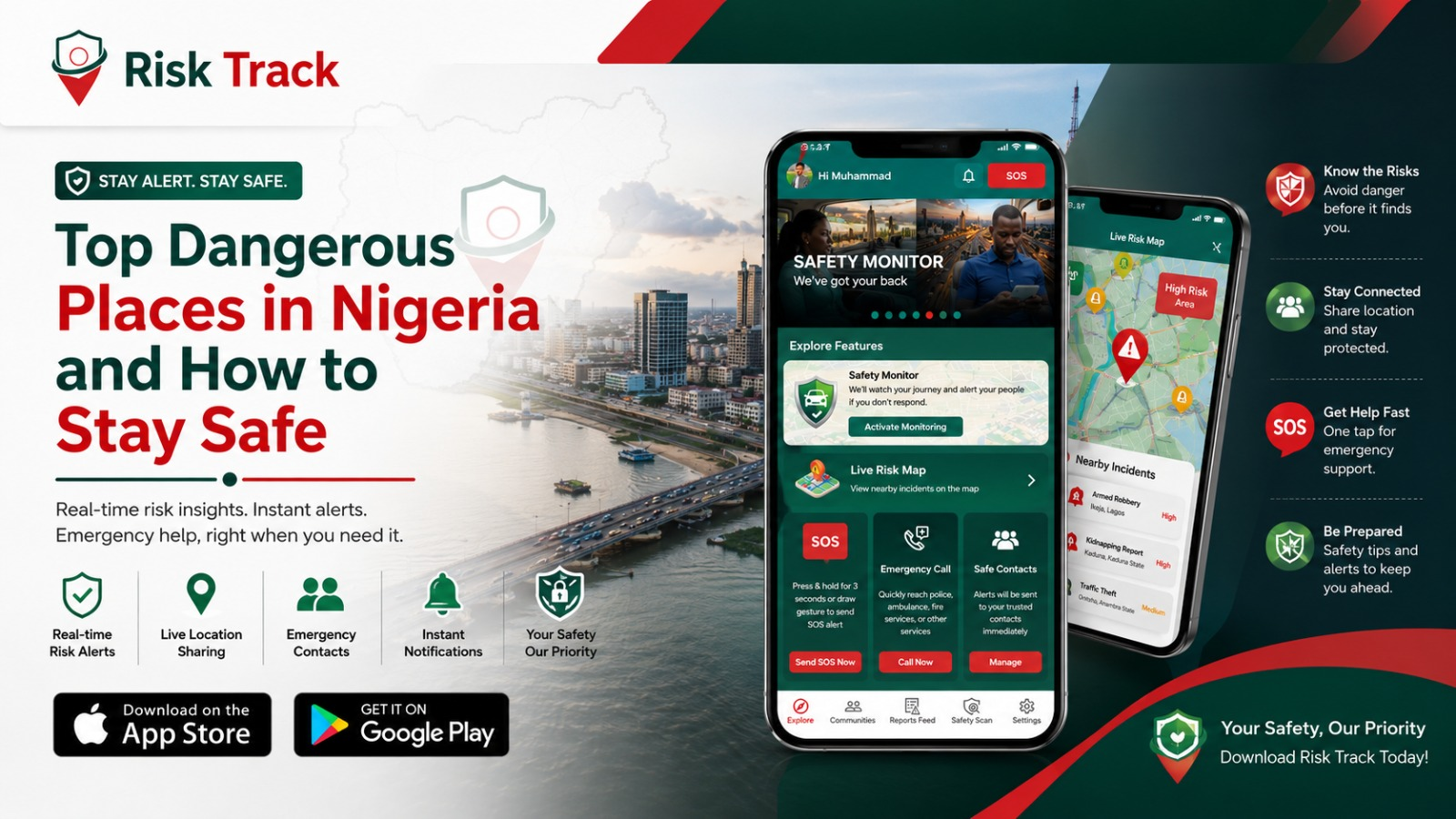
Nigeria is Africa's most populous country and one of the continent's largest economic hubs. Millions of people travel daily between cities, towns, and rural communities for work, education, tourism, and business. While many destinations are safe and welcoming, some dangerous places in Nigeria are known for higher crime rates, security concerns, traffic hazards, or other risks that require extra caution.
Understanding potential risks does not mean avoiding travel altogether. Instead, it helps travelers and residents make informed decisions, stay alert, and take practical safety measures. Whether you are planning a trip, relocating, or simply exploring different regions, knowing which areas require additional vigilance can significantly improve personal safety.
This guide explores some of the most dangerous places in Nigeria, discusses common safety concerns, and provides practical strategies to help you stay safe wherever you go.
Several factors contribute to safety concerns across different regions of Nigeria. These may include:
It is important to remember that not every neighborhood within a city experiences the same level of risk. Many locations categorized as unsafe places in Nigeria also contain secure residential and commercial districts where people live and work safely every day.
Lagos is Nigeria's largest city and commercial capital. While it offers tremendous business and cultural opportunities, it also experiences challenges associated with dense populations and urban crime.
Common concerns include pickpocketing, phone theft, traffic-related incidents, and scams targeting visitors. Some neighborhoods report higher crime levels than others, making Lagos one of the most discussed dangerous cities in Nigeria when evaluating urban safety.
Port Harcourt plays a vital role in Nigeria's oil industry. However, certain areas have experienced security concerns related to organized crime and economic tensions.
Kaduna remains an important commercial and educational center. However, some surrounding regions have experienced security challenges in recent years.
Kano is one of the country's largest cities and an important trade hub. While many areas remain active and relatively secure, travelers should remain aware of changing local conditions.
Maiduguri has faced significant security challenges due to regional instability over the years.
Nigeria's capital city generally maintains strong security measures. However, some outskirts and remote areas have occasionally reported criminal activities.
Benin City is known for its rich cultural heritage, but some districts experience elevated crime concerns compared to other areas.
As one of West Africa's busiest commercial centers, Onitsha attracts large crowds and heavy traffic. Potential risks include theft in crowded markets, traffic accidents, and opportunistic scams. Maintaining situational awareness can reduce many common risks.
Warri has historically experienced periods of unrest and security challenges linked to economic and regional factors.
Lokoja serves as a key transportation corridor connecting multiple regions. Heavy traffic and road-related hazards contribute to safety concerns.
When discussing the crime rate in Nigeria by city, it is important to recognize that statistics can fluctuate over time. Crime patterns may vary significantly between neighborhoods, districts, and local government areas.
Factors influencing local crime levels include:
Because crime trends change, travelers should always consult recent local information before visiting unfamiliar locations.
Many online discussions attempt to identify the most crime city in Nigeria. However, such rankings often vary depending on data sources, reporting periods, and measurement methods.
Instead of focusing solely on rankings, travelers should evaluate:
A city may appear on one list of most dangerous areas in Nigeria while remaining relatively safe for visitors who follow basic safety precautions.
While most travel can be completed safely with proper planning, certain situations may require additional caution.
Being aware of potential places to avoid in Nigeria during specific circumstances can significantly reduce risk exposure.
While discussions often focus on risk, there are also many safest places in Nigeria where residents and visitors enjoy relatively stable environments. Examples may include well-developed residential communities, business districts with strong security presence, educational and government zones, and tourist areas with established infrastructure. Safety conditions can evolve, making ongoing awareness important regardless of location.
Technology has become one of the most effective tools for personal safety. Modern safety applications help users stay informed and connected during emergencies. Key features often include:
Instant SOS alerts allow users to notify trusted contacts when help is needed.
Location sharing helps family members monitor travel progress and respond quickly if concerns arise.
Users can receive information about nearby hazards and report safety concerns within their communities.
Quick access to emergency contacts reduces response times during critical situations.
Route guidance can help users identify safer travel options when navigating unfamiliar locations.
Apps such as Risk Track are designed to support proactive safety awareness by combining emergency alerts, location tools, and community-driven reporting features. You can also explore our personal safety app for comprehensive protection features.
Whether you are visiting one of the dangerous places in Nigeria or simply commuting locally, these precautions can help reduce risk.
Understanding the dangerous places in Nigeria is an important step toward safer travel and daily living. While certain regions may face higher security challenges, informed decision-making and practical precautions can significantly reduce personal risk.
Whether exploring major cities, traveling for business, or visiting family, maintaining awareness, planning routes carefully, and using modern safety tools can help protect you and your loved ones. By staying informed and prepared, travelers can confidently navigate Nigeria while prioritizing personal safety at every step.
Platforms like Risk Track are helping users stay safer through real-time alerts, emergency SOS systems, and personal safety app features designed for modern travel and daily life.
Commonly discussed locations include Lagos, Port Harcourt, Kaduna, Maiduguri, Kano, Warri, and some high-risk transportation corridors.
Factors include crime levels, traffic hazards, security incidents, infrastructure challenges, and regional instability.
Cities frequently mentioned in safety discussions include Lagos, Port Harcourt, Kaduna, and Maiduguri, though conditions vary by neighborhood.
Crime rates differ significantly between cities and districts. Travelers should consult recent local information for the most accurate assessment.
Remote roads, unfamiliar neighborhoods, and isolated locations may present increased risks after dark.
Well-developed residential areas, business districts, government zones, and established tourist destinations are often considered among the safest locations.
Plan routes carefully, stay informed, avoid displaying valuables, and use trusted transportation providers.
Contact emergency services, notify trusted contacts, and use emergency alert features available through safety applications.
A personal safety app can provide SOS alerts, location sharing, incident updates, and emergency communication tools.
Situational awareness helps individuals recognize potential risks early and make safer decisions while traveling or commuting.