 Risk Track
Risk Track
Risk Track
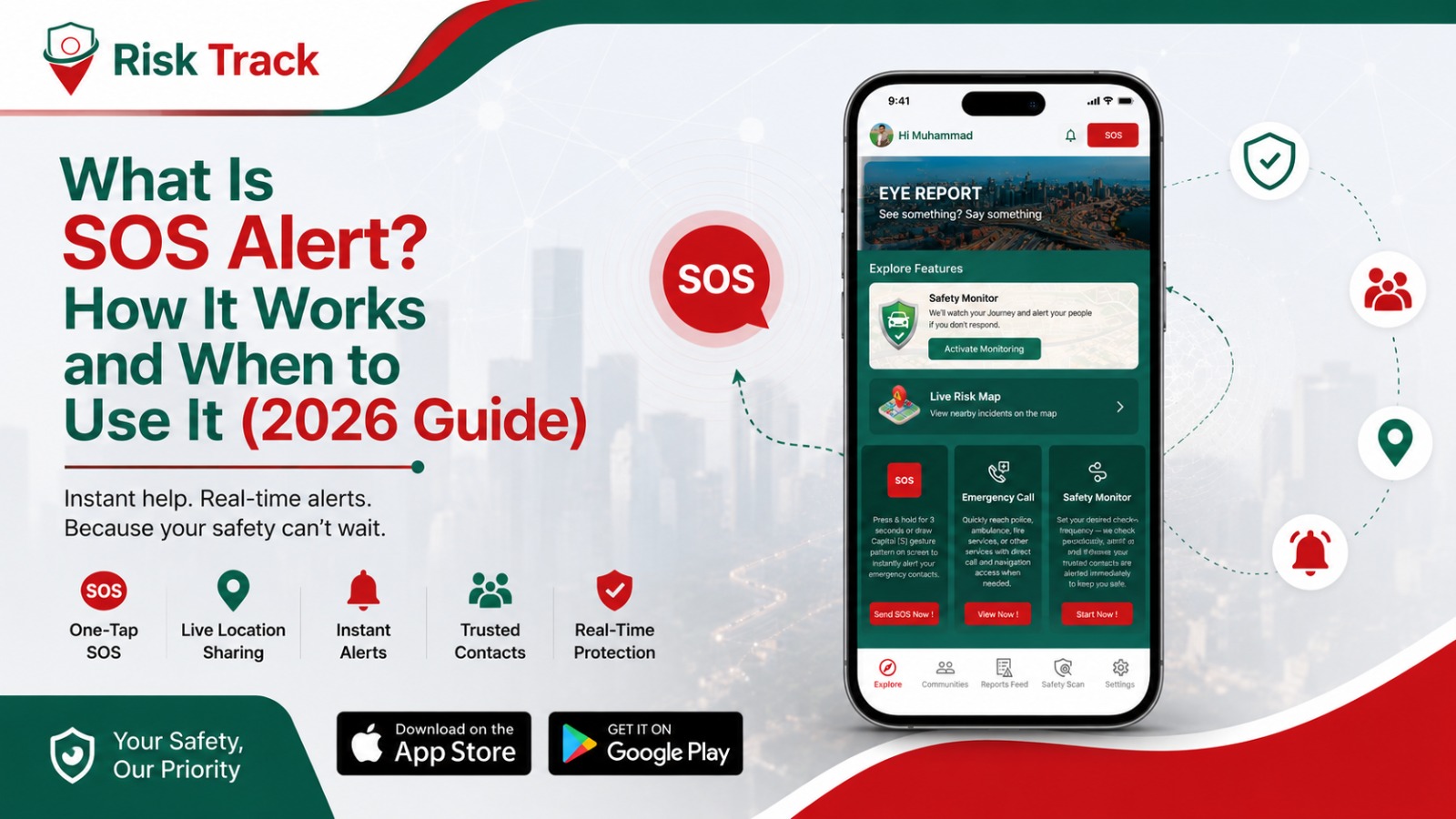
Have you ever wondered how people can quickly call for help during an emergency with just a few taps on their phone? Whether it's a medical emergency, a road accident, or a personal safety threat, an SOS alert can instantly notify trusted contacts and, in some cases, emergency services. Understanding how this feature works can make a significant difference when every second matters.
Today, most smartphones include a built-in emergency SOS feature, and many personal safety apps offer even more advanced protection. These systems are designed to help users share their location, send emergency notifications, and connect with loved ones during critical situations.
In this guide, you'll learn what SOS alert is, how it works, when to use it, and why it has become an essential safety feature for individuals, families, travelers, students, and professionals. You'll also discover how modern solutions like SOS Emergency System provide additional layers of protection beyond standard smartphone features.
An SOS alert is an emergency notification designed to quickly inform trusted contacts or emergency responders that someone needs immediate assistance. Depending on the device or application being used, an SOS alert can automatically send your current location, emergency message, and other important information with just one action.
Unlike making a regular phone call, an SOS alert can communicate your emergency even when you are unable to speak. This makes it especially useful during accidents, health emergencies, personal safety threats, natural disasters, or situations where time is critical.
Modern smartphones, smartwatches, and personal safety applications have made emergency alerts faster and more reliable than ever before. Many systems can automatically share GPS coordinates, trigger emergency notifications, and continuously update your location until help arrives.
For individuals looking for additional protection, dedicated safety platforms such as Risk Track expand these capabilities through an advanced SOS Emergency System that helps users stay connected with family members and emergency contacts whenever they feel unsafe.
The term SOS has long been associated with emergency distress signals. Originally used in maritime communications, it has evolved into a universal symbol that represents an urgent request for help.
Today, the SOS alert meaning goes far beyond its historical origins. Instead of sending Morse code, modern technology allows users to activate emergency assistance instantly through smartphones, wearable devices, or personal safety applications.
A typical SOS alert may include:
These features enable family members and trusted contacts to respond more quickly while improving the chances of receiving timely assistance.
Personal safety has become an increasing concern worldwide. People commute alone, travel to unfamiliar places, work late hours, and spend more time outdoors than ever before.
Unexpected situations can occur without warning, including:
In these situations, reaching for a phone and searching through contacts may waste valuable time.
An emergency SOS alert simplifies the entire process by allowing users to request help almost instantly.
This rapid communication can reduce response times and keep trusted contacts informed throughout the emergency.
Understanding how SOS alert works helps users appreciate why it has become one of the most valuable personal safety tools available today.
Although different devices and applications work slightly differently, the overall process is similar.
Most smartphones allow users to activate the SOS function by pressing the power button multiple times or holding specific buttons simultaneously.
Personal safety applications often provide a large SOS button that can be activated directly from the home screen.
Once activated, the system immediately sends an emergency notification to selected contacts.
The notification may include:
This functions as an instant SOS notification, helping trusted contacts understand that immediate assistance may be required.
Most modern systems automatically share the user's live location using GPS technology.
Rather than sending only one location, many platforms continue updating the user's position as they move.
Continuous tracking helps responders locate the individual more accurately.
Many smartphones automatically place an emergency call after the SOS feature has been activated.
Depending on the country and device settings, the phone may connect directly with local emergency services.
Some personal safety apps also provide quick access to emergency numbers while simultaneously notifying family members.
Advanced personal safety platforms continue monitoring the user's location until the emergency ends.
This provides family members with real-time visibility instead of relying on a single location update.
The combination of emergency communication and continuous tracking makes today's SOS emergency system much more effective than traditional emergency calls.
Not every emergency is the same. Different situations require different methods of communication.
Below are the most common types of SOS alerts available today.
Most Android and iPhone devices include a built-in mobile SOS feature that allows users to quickly contact emergency services and notify trusted contacts.
This option is suitable for everyday emergencies and requires minimal setup.
Dedicated safety applications offer enhanced protection beyond standard smartphone capabilities.
These apps often include:
Risk Track is an example of a personal safety platform that integrates these tools into a complete emergency response solution.
Smartwatches and wearable devices often include emergency buttons that allow users to request assistance without reaching for their phone.
These devices are especially useful for:
Many modern vehicles include automatic emergency response systems.
These systems can detect collisions and automatically contact emergency responders while sharing vehicle location information.
Businesses increasingly use emergency alert systems to protect employees during workplace emergencies.
These systems can quickly notify staff about fires, security threats, severe weather, or evacuation procedures.
Knowing when to use SOS alert is just as important as understanding how it works.
An SOS alert should only be activated when immediate assistance is needed or when someone feels that their safety is at risk.
Common situations include:
If someone experiences chest pain, severe injury, unconsciousness, or another life-threatening condition, activating an SOS alert can notify family members while emergency services are contacted.
If you believe someone is following you, attempting harassment, or creating an unsafe situation, an SOS alert can immediately inform trusted contacts of your location.
Following a vehicle collision or motorcycle accident, sending an emergency alert allows loved ones to know your exact location while help is arranged.
Solo travelers often visit unfamiliar places where local emergency assistance may be difficult to access quickly.
Using a personal safety SOS feature provides additional peace of mind by keeping trusted contacts informed throughout the journey.
Hiking, camping, cycling, and trekking sometimes take place in remote areas where immediate assistance may not be available.
An emergency alert can help rescuers locate individuals more efficiently.
Parents and caregivers increasingly rely on emergency alert systems to protect children and older adults.
If assistance is needed, an emergency contact alert can quickly notify family members without requiring lengthy phone conversations.
While many smartphones include basic emergency features, SOS Emergency System is designed to provide a more comprehensive approach to personal safety. Instead of only sending a one-time alert, it focuses on keeping users connected during an emergency through features such as instant SOS activation, live location sharing, emergency contact notifications, and continuous safety monitoring.
Whether you're commuting, traveling, working late, or spending time outdoors, Risk Track helps ensure that trusted contacts receive timely information when you need assistance most.
An SOS alert is more than just an emergency button. It is a proactive safety feature that helps users respond quickly during unexpected situations. Whether you are at home, traveling, or commuting alone, activating an emergency SOS alert can provide peace of mind and improve your chances of getting help faster.
Here are some of the biggest benefits:
Time is critical during emergencies. An SOS alert immediately notifies your trusted contacts with your location and emergency message, reducing delays that can occur with traditional phone calls.
Many modern safety platforms continue sharing your live location until the emergency ends. This allows family members or responders to track your movement and reach you more quickly.
Using a personal safety SOS feature helps you stay connected with people who can assist you when you feel unsafe. Whether you're walking alone at night or traveling in an unfamiliar area, help is only a tap away.
Emergencies can make it difficult to think clearly. Most SOS systems are designed with simple activation methods, allowing users to send alerts within seconds.
Parents, caregivers, and loved ones gain confidence knowing they can receive an emergency contact alert if someone needs immediate assistance.
Although the setup process varies depending on your smartphone or safety application, most systems follow similar steps.
Select trusted family members or friends who can respond quickly during an emergency.
Choose people who:
Your SOS system works best when GPS is enabled. Accurate location sharing helps emergency contacts find you faster.
Many apps allow you to customize the message sent during an emergency.
For example:
"I need immediate help. This is my current location."
Before relying on your emergency system, perform a test with your emergency contacts so everyone understands how notifications work.
Review your emergency contacts regularly and update them if your circumstances change.
Many smartphones include a basic emergency feature, but personal safety requires more than sending a single notification.
Risk Track's SOS Emergency System is designed to provide a complete safety experience by helping users stay connected before, during, and after an emergency.
Key features include:
Users can quickly send emergency alerts without navigating multiple menus.
Trusted contacts receive your current GPS location, making it easier to locate you during emergencies.
Multiple emergency contacts can receive alerts simultaneously, increasing the likelihood of a rapid response.
Instead of sending only one alert, Risk Track supports ongoing monitoring to help contacts stay informed until you are safe.
Whether you're a student, solo traveler, commuter, parent, senior, or night-shift worker, Risk Track's SOS Emergency System helps you stay prepared for unexpected situations.
Using an SOS alert effectively requires preparation. These simple practices can improve your safety.
A low battery can prevent emergency alerts from being sent.
Location sharing is one of the most valuable features of an emergency alert app.
Ensure your emergency contacts are current and understand what to do if they receive your alert.
Knowing how to activate your SOS feature before an emergency can save valuable time.
If you activate an SOS alert, try to move to a safe location if possible while waiting for assistance.
Although SOS systems are simple to use, some common mistakes reduce their effectiveness.
Without emergency contacts, your alert may not reach the people who can help you.
Turning off GPS limits the usefulness of your emergency alert.
If phone numbers change, your alerts may never be received.
Learn how your device activates its SOS feature to reduce false alarms.
An SOS alert is an important safety tool, but you should also remain aware of your surroundings and follow local emergency guidance.
Almost everyone can benefit from an SOS alert, including:
Having access to a reliable SOS emergency system provides an additional layer of protection in everyday life.
Emergency technology continues to evolve rapidly. Modern systems are becoming smarter, faster, and more connected.
Future SOS solutions may include:
As technology advances, personal safety applications will continue playing a larger role in helping people respond to emergencies more effectively.
Understanding what is an SOS alert is the first step toward improving your personal safety. An SOS alert enables you to quickly notify trusted contacts, share your location, and request assistance when every second matters.
Whether you're facing a medical emergency, traveling alone, commuting late at night, or simply preparing for unexpected situations, an emergency SOS alert provides valuable peace of mind.
While many smartphones offer a built-in mobile SOS feature, dedicated safety platforms deliver additional functionality that helps users stay protected beyond basic emergency notifications.
With SOS Emergency System, users can activate emergency alerts instantly, share their live location, notify trusted contacts, and stay connected during critical situations. Combining technology with preparation allows individuals and families to respond faster and stay safer when emergencies occur.
An SOS alert is an emergency feature that quickly notifies trusted contacts or emergency services when you need immediate help. It may also share your live location and emergency message.
The SOS alert meaning refers to a universal emergency signal that indicates someone needs urgent assistance. Today, it is commonly used in smartphones and safety applications.
How SOS alert works depends on the device or application, but most systems send an emergency notification, share your GPS location, and contact trusted people after activation.
You should use an SOS alert during emergencies such as accidents, medical situations, personal safety threats, natural disasters, or whenever you require immediate assistance.
Some smartphones automatically call local emergency services, while others primarily notify your emergency contacts. The available features depend on your device and location.
Many devices can place emergency calls without internet access if a mobile network is available. However, features like live location sharing may require mobile data or Wi-Fi.
An SOS notification often includes your name, GPS location, emergency message, and the time the alert was activated.
A personal safety SOS feature is useful for students, women, travelers, senior citizens, parents, outdoor enthusiasts, and anyone who wants added protection during daily activities.
Risk Track offers instant SOS activation, live location sharing, emergency contact notifications, and continuous safety monitoring, helping users stay connected throughout an emergency.
Yes. It is recommended to test your SOS feature with your trusted contacts so everyone understands how the system works and can respond appropriately.